Every Page Objectionable - by Cole Simmons - Cole's Notes
Clipped from: https://localteacher.substack.com/p/every-page-objectionable
Every Page Objectionable - by Cole Simmons - Cole's Notes
When I forget what Witt is trying to accomplish, what sorts of obstacles he believes he is overcoming, I am in danger of losing all respect for his book. Which is a way of saying that I have many objections to chapters 10 and 13 (the chapters where Witt attacks C.S. Lewis). I want to record some of my thoughts here, because I don’t think I want to include all these side arguments in the main article at TNAA.
I will update this post periodically, to avoid spamming subscribers’ inboxes.
9.10
Consider this paragraph from Chapter 10.
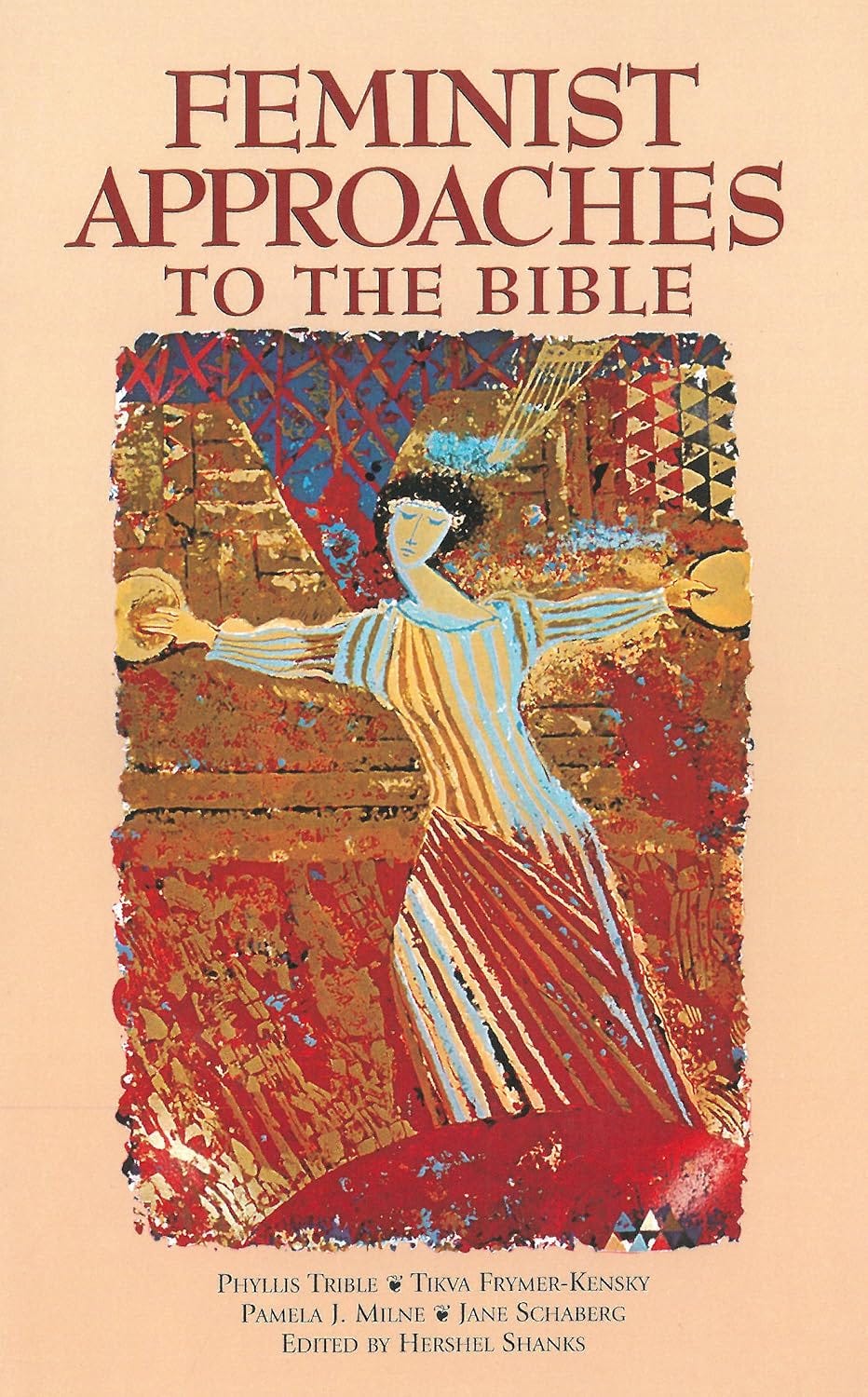
Oddly, those who point to an exclusively male Old Testament priesthood ignore what is certainly the most significant and obvious factor excluding women from the priesthood. The Old Testament purity laws, which, again, were primarily connected with temple worship, would have prohibited women from performing priestly functions for several days at least once a month, and for a significant period after childbirth. In addition, many Old Testament temple functions were periodically scheduled (feasts, periodic prayers), and women could not be depended on to be ritually pure on each occasion the function needed to be performed. Tikva Frymer-Kensky’s claim that the “religious dimension of sexuality disappears in biblical monotheism” provides the rationale: “The priests, guardians of Israel’s ongoing contact with the Holy, had to be particularly careful to keep preserve (sic) the separation between Israel’s priestly functions and attributes of any hint of sexuality.” One of the purposes of the impurity provisions of Israel’s law was to keep both sexual activity and death separate from the sacred realm. Anyone who was ritually impure was not allowed to participate in the rites of the temple. Women did perform certain religious roles during the Old Testament period, but they were generally the kinds of things that one could do at home. (180)
How could a priesthood that procreates be free from “any hint of sexuality.” It’s not “sexuality” that is unclean. If the Levitical Priesthood were supposed to be free of all sexuality, it would look much more like the Catholic priesthood. Sex as sex wasn’t held to be unclean. Consider:
Leviticus 21:7–9 (ESV): 7 They shall not marry a prostitute or a woman who has been defiled, neither shall they marry a woman divorced from her husband, for the priest is holy to his God. 8 You shall sanctify him, for he offers the bread of your God. He shall be holy to you, for I, the LORD, who sanctify you, am holy. 9 And the daughter of any priest, if she profanes herself by whoring, profanes her father; she shall be burned with fire.
The priests, who are clean, have daughters. The prostitute isn’t unclean because she has sex.
It is a typically liberal belief that everything conservative and traditional is erroneously afraid of sex. It’s a very shallow and feminist view of sex, and it always leads to people thinking they can solve sexual issues by more and more talking. It’s the Therapist Mindset.
9.11
Witt and others have their “narrative view.” Nothing is wrong with this mode of reading, if you get it right. Here is Witt’s “narrative view” of the Old Testament:
New Testament Christianity was a form of Judaism. Christians affirmed their faith in the God of Israel who had created the world, had made a covenant with Abraham and his descendants, had rescued the people of Israel from slavery in Egypt, and had given the people his law at Mount Sinai. (181)
This is the “it’s all about liberating people” narrative, i.e., if you cut out the immense concern for racial purity and the possession of the Holy Land, if you free yourself to delete the most significant parts of the narrative, you can pretend the Old Testament promotes liberal values, above all the “liberation of the oppressed.”
In my upcoming TNAA article, I will explain the actual narrative. I will show how the preeminent concern of the Jews was their Priesthood. Witt is correct when he sees that Christianity took an originally Jewish concern and universalized it. He’s right when he says:
The New Testament identifies Jesus as the high priest who has succeeded the Old Testament priesthood, and his death on the cross as the single sacrifice making animal sacrifices no longer necessary (Heb. 7–10). The New Testament identifies the temple no longer with the temple in Jerusalem, but with both Christ and the church (1 Cor. 3:16-17; Eph. 2:19-22). (182)
Now, Witt is going through all these things so that he can make his final point: Christians aren’t bound by the purity laws, and the only or main reason women weren’t Levitical priest was because they could not be counted upon to be ritually clean; women are too “sexual” for “purity laws.”
This final point only matters if (1) Christians must base their priesthood on the Levitical priesthood; if (2) the Levitical Priesthood excludes women solely because they are often ritually impure.
I tend to agree with Witt, that the Christian priesthood has its roots in the Levitical priesthood, insofar as the purposes of both priesthoods are similar: both exist to unify a people around God, and to purify that people of the world. But I don’t believe there is any evidence that Christ or the disciples believed they should’ve been making women into priests because the old purity laws weren’t binding on the new mystical body.
And as I showed above, Witt’s own understanding of the purity laws is flawed. He follows ~Tikva-Fyrensky~ Tikva Frymer-Kensky in believing that sex was itself impure. ~It’s not sex, it’s~ ~mortality~~, i.e., the marks of sin. (I am assuming here that the~ ~pains~ ~of menstruation are involved with the~ ~pains of childbirth~~. That, at any rate, this kind of pain is closely associated with mortality.)~ (Too narrow an explanation.)
The purity laws did not apply; but the concern for purity was—as Witt admits—absolutely a central concern to the Christian. Like the one sacrifice that supplanted the need for continual sacrifices, there is also a more thorough purity that replaced the variety of Jewish attempts at purity.
[
lol
9.12
Witt opens Chapter 10 with this claim:
Stated as succinctly as possible, the objection is that an ordained woman would be a “priestess,” and the Christian church does not have “priestesses,” but “priests.” This is an objection that one does not hear among Protestants, since Protestant churches do not refer to their clergy as either “priests” or “priestesses,” but as pastors. (173)
While stating it “succinctly” he distorts the argument. The argument, given by Lewis, is very appealing to Protestants. The mere name “priest” is not that important. Plus: both Lutherans and Anglicans often call their ministers “priests.”
Consider the “Four Suppositions Argument,” which is the backbone of Lewis’ argument against priestesses. It’s perfectly intelligible to Protestants as well as Catholics.
[