The FAQs: What Should Churches Do When Protest Enters the Sanctuary?
Clipped from: https://www.thegospelcoalition.org/article/faqs-churches-protest-sanctuary/
By Joe Carter
What just happened?
Protesters disrupted a Minnesota church service on Sunday after activists determined one of the pastors works as the acting director of U.S. Immigration and Customs Enforcement’s field office in St. Paul, says the Minnesota Star Tribune. Activists, including some from Black Lives Matter Minnesota, attended the service at Cities Church in St. Paul and chanted, “Justice for Renee Good.”
Cities Church pastors include Desiring God president and CEO Marshall Segal and executive editor David Mathis. The church is led by Jonathan Parnell, who was confronted on camera and misidentified by former CNN anchor Don Lemon.
Harmeet Dhillon, assistant attorney general for the U.S. Department of Justice, announced an investigation of possible criminal violations. Attorney general Pamela Bondi also said,
On X, North American Mission Board president Kevin Ezell wrote,
How common are such disruptions?
According to the Family Research Council, 383 churches endured a combined total of 415 hostile incidents in 2024, including vandalism, arson, armed aggression, and service disruptions. Armed incidents more than doubled from 12 in 2023 to 28 in 2024.
To date, the organization has identified 1,384 acts of hostility toward U.S. churches, occurring between January 2018 and December 2024.
Is a church a public space where anyone may protest?
No. Under U.S. law, churches are private property, even when open to the public for worship. Property owners—including churches—retain the right to set rules for conduct on their premises and to remove individuals who violate those rules.
The Supreme Court held in Lloyd Corp. v. Tanner (1972) that private property doesn’t become a public forum merely by being open to the public. A Connecticut appeals court applied this principle directly to churches in State v. Steinmann (1990), observing that “property does not lose its private character merely because the public is generally invited to use it for designated purposes.” This means speech protected outside the church building (such as on a sidewalk) doesn’t automatically enjoy the same protection inside a sanctuary.
When does protest become unlawful inside a church?
Protest typically becomes unlawful when it involves disruption, refusal to comply with lawful instructions, or interference with religious worship.
Examples commonly recognized in law include interrupting a worship service, shouting or chanting during prayer or preaching, blocking aisles or access points, refusing to leave when asked by church leadership, and attempting to seize microphones or approach the platform. At that point, the issue is no longer political disagreement but becomes a legal issue (e.g., trespass or disorderly conduct).
What federal laws protect churches from disruption?
The Freedom of Access to Clinic Entrances Act (FACE Act, 18 U.S.C. § 248), enacted in 1994, prohibits the use of force, threat of force, or physical obstruction to interfere with anyone “lawfully exercising or seeking to exercise the First Amendment right of religious freedom at a place of religious worship.” Physical obstruction under this law means rendering entrance to or exit from a place of worship impassable or making passage unreasonably difficult or hazardous.
Violations can result in fines and imprisonment, with enhanced penalties for repeat offenses or incidents involving bodily injury. Churches and aggrieved individuals can also bring civil suits seeking injunctive relief, compensatory and punitive damages, and attorneys’ fees. Additionally, 18 U.S.C. § 247 specifically addresses damage to religious property and obstruction of persons in the free exercise of religious beliefs.
What state laws apply?
Nearly every state has laws specifically criminalizing the disruption of religious services.
In Minnesota, the state where the latest incident occurred, Section 609.28 makes it a gross misdemeanor to “intentionally and physically [obstruct] any individual’s access to or egress from a religious establishment.”
In California, Penal Code 302 makes it a misdemeanor to intentionally disturb any assembly of people meeting for religious worship by “profane discourse, rude or indecent behavior, or by any unnecessary noise,” with penalties including up to one year in jail, a $1,000 fine, or both.
In Florida, Section 871.01 makes it a first-degree misdemeanor to “willfully and maliciously” interrupt or disturb any assembly of people met for worship; if the disruption includes a credible threat, it becomes a third-degree felony.
In Virginia, if the disruption “prevents or interferes with orderly conduct” or tends to cause violence, it’s classified as a Class 1 misdemeanor.
Similarly, in Massachusetts, Chapter 272, Section 38 punishes anyone who “wilfully interrupts or disturbs” an assembly gathered for worship with up to one year imprisonment or a $1,000 fine, while in New York, Penal Law § 240.21 criminalizes disruption of religious services.
The common thread across these statutes is the word “willfully”—the law targets intentional, purposeful disruption, not accidental disturbances.
Is asking someone to leave a church a violation of religious freedom?
No. Religious liberty protects a church’s right to govern its own worship according to its theological convictions. The First Amendment doesn’t require a church to provide a platform for messages contrary to its mission.
In Hosanna-Tabor Evangelical Lutheran Church and School v. EEOC (2012), the Supreme Court unanimously affirmed the autonomy of religious institutions in matters of internal governance. A church that removes a disruptive individual is exercising its own religious freedom.
What speech remains protected near churches?
Not all protest activity near churches is unlawful. The following remain constitutionally protected: peaceful picketing on public sidewalks, handing out leaflets on public property, quiet demonstration that doesn’t interfere with access or worship, and verbal criticism of the church or its beliefs from a distance.
However, when protesters block entrances, enter the building without permission, use amplified sound to drown out worship, threaten or intimidate congregants, or refuse to leave when asked, they’ve crossed the line from protected speech into unlawful conduct.
Should pastors personally confront protesters during the service?
Generally, no. Pastors are shepherds, not security officers. Confrontation during worship can escalate rather than resolve the situation. According to guidance from Brotherhood Mutual Insurance and other church-safety experts, best practice is for the pastor to continue the service if possible while trained volunteers or designated leaders handle the situation, with law enforcement contacted if the disruption persists. This approach protects the congregation and prevents the pulpit from becoming a stage for conflict.
What should a church do when protesters arrive?
First, remain calm and avoid confrontation. Protesters often seek to provoke a reaction and may be filming the interactions. The goal should be de-escalation rather than debate.
Second, discourage individual congregation members from approaching protesters. Instead, a designated representative—ideally someone with a calm demeanor—should approach with witnesses present to politely but clearly ask the protesters to leave the property. While one person engages with the situation, another should call law enforcement.
Third, document the interaction if possible, but don’t allow documentation to become confrontational. According to Church Law & Tax, courts have upheld the right of churches to use “reasonable force” in removing trespassers, but this force should always be a last resort.
Is calling the police an overreaction?
Not necessarily. Calling law enforcement is appropriate when a person refuses to leave private property, when worship is being intentionally disrupted, when there are credible safety concerns, or when leaders are unable to de-escalate the situation.
Don’t wait for a situation to escalate before calling the police. When they arrive, officers can issue trespass warnings, arrest for disorderly conduct or disturbing worship, and create an official record of the incident.
Building a relationship with local law enforcement before any incident occurs is also valuable. Many police departments will conduct security assessments and may even provide officers for services when specific threats are identified.
Romans 13 reminds Christians that civil authorities exist to restrain disorder, not merely to punish crime. Involving law enforcement is often an act of prudence and responsible pastoral care.
What about protecting vulnerable members during a disruption?
While leadership addresses the disruption, other church members should ensure the safety of children, elderly members, and anyone else who appears distressed. If protesters have entered the building, moving vulnerable individuals to secure interior rooms may be appropriate. Children’s ministry areas should have secure access protocols and clear procedures for lockdowns, and parents should know these procedures in advance.
According to Ministry Pacific, if your church broadcasts services online, consider implementing a delay of at least 30 seconds so you can cut the feed if disruption occurs, rather than broadcasting the incident to a wider audience—which may be what protesters intend.
Should churches take special precautions when high-profile public figures attend?
Yes, wisely and quietly. When elected officials, judges, well-known speakers, or other public figures attend worship, churches face an increased risk of protest, disruption, or unwanted attention.
Reasonable measures may include a designated security or safety team (trained volunteers rather than ad hoc responders), a clear chain of command for handling disruptions, coordination with local law enforcement before high-profile visits, controlled access points during services, greeters trained to observe and report concerns, and clear procedures for removing disruptive individuals.
For public figures without dedicated security, consider hiring off-duty law enforcement officers for the events or regular services. These measures should still preserve the atmosphere of worship while preparing for contingencies.
Should churches announce security measures publicly?
Generally, no. Publicizing protocols can unintentionally invite disruption. The best practice is to ensure internal clarity by having members know whom to contact and what to do.
Security team members should be equipped with two-way radios and use plain language whenever possible. However, some churches adopt a color code for common situations (such as “Code Yellow” for suspicious person, “Code Red” for immediate threat) so security can communicate without alarming congregants who overhear radio traffic.
How should a church build a security team?
The best crisis response begins long before the crisis arrives.
Look for individuals with calm temperaments, situational awareness, and the ability to serve without drawing unnecessary attention. Experience in law enforcement, military, or security is valuable but not essential. What matters most is character, judgment, and a servant’s heart.
All security team members should undergo background checks and receive regular training covering de-escalation techniques, emergency response protocols, first aid, and the legal framework for using force.
According to Tithe.ly, in an emergency, the pastor shouldn’t have operational command; that should be left to the security team. They should have the authority to decide when to evacuate, when to call law enforcement, and when to implement lockdown procedures. This distinction must be established and communicated before any incident occurs.
Why are written policies important?
Document your church’s security protocols in writing. Include procedures for medical emergencies, fire, severe weather, active threats, and protest or disruption. Ensure pastors, staff, and security team members all have access to these documents and review them regularly.
Written policies also provide legal protection. If an incident occurs and litigation follows, having documented procedures shows that the church took reasonable precautions.
What theological principles should guide churches in these moments?
Three biblical truths must be held together. First, the church is a sacred assembly. Paul describes gathered worship as ordered and peaceable: “God is not a God of confusion but of peace” (1 Cor. 14:33). Second, the church welcomes sinners—but not disruption. Hospitality doesn’t require surrendering the gathering itself. Third, the church isn’t a political theater. Worship is directed vertically before it’s expressed horizontally. When protest overtakes praise, the purpose of the assembly is lost.
Does increased security contradict trust in God?
No. Trust in God has never excluded preparation. Nehemiah both prayed and posted guards (Neh. 4:9). Jesus instructed his disciples to be “wise as serpents and innocent as doves” (Matt. 10:16) and spoke of prudence in dangerous contexts (Luke 22:36). Security isn’t fear; it’s stewardship. Protecting your congregation is an act of love. Doing so with grace—responding to even hostile protesters with firm kindness rather than retaliation—is an act of witness.
In an age of increasing hostility toward religious communities, churches must prepare. But our preparation should never descend into fear or hostility. We protect because we love. We plan because we’re stewards. And we trust that, ultimately, our security rests in the hands of One who neither slumbers nor sleeps (Ps. 121:4).
Free eBook by Tim Keller: ‘The Freedom of Self-Forgetfulness’
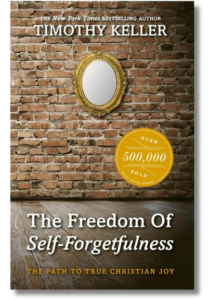 Imagine a life where you don’t feel inadequate, easily offended, desperate to prove yourself, or endlessly preoccupied with how you look to others. Imagine relishing, not resenting, the success of others. Living this way isn’t far-fetched. It’s actually guaranteed to believers, as they learn to receive God’s approval, rather than striving to earn it.
In Tim Keller’s short ebook, The Freedom of Self-Forgetfulness: The Path To True Christian Joy, he explains how to overcome the toxic tendencies of our age一not by diluting biblical truth or denying our differences一but by rooting our identity in Christ.
TGC is offering this Keller resource for free, so you can discover the “blessed rest” that only self-forgetfulness brings.
Get access to your FREE ebook »
Editors’ note:
TGC’s “ Thorns & Thistles ” column seeks to apply wisdom with practical advice about faith and work. If you have a question on how to think about and practice your work in a way that honors God, let us know at ask@tgc.org.
Many scenarios could make the seasonal burdens of work feel overwhelming—think of an accountant in April, a teacher in August, or a pastor in December. But our work can also feel overwhelming on a more mundane level. A full email inbox, a big project, or even the regular daily grind can leave us tired and discouraged. What does God offer in the Bible when I’m feeling overwhelmed by work?
One definition of “overwhelm” is “[to] bury or drown beneath a huge mass.” While our work might feel like a huge mass we’re buried or drowning beneath, God tells us in Scripture, “When you pass through the waters, I will be with you; and through the rivers, they shall not overwhelm you; when you walk through the fire you shall not be burned and the flame shall not consume you” (Isa. 43:2).
We also know we’re “afflicted in every way, but not crushed; perplexed, but not driven to despair; persecuted, but not forsaken; struck down, but not destroyed” (2 Cor. 4:8–9).
So while we may feel overwhelmed, we can remind ourselves that since we belong to Christ, we aren’t actually buried or drowned.
Questions to Ask
Let’s consider a few questions to determine what’s leading us to feel overwhelmed.
1. Are we taking on more than is ours to take?
We may not have control over what our leaders assign as our responsibilities, but we do have control over what job we agree to take in the first place, how we communicate our capacity, and what we choose not to take on beyond our role.
Do we count the cost of duties, responsibilities, and travel expectations before committing to a position? Have we taken opportunities to be humbly transparent about our heavy workload or long hours so our leaders might consider deprioritizing certain initiatives or sharing our responsibilities with another teammate? Are there other areas—our time in the Word, our investment in family, or our community building—that we need to make room for too?
Since we belong to Christ, we aren’t actually buried or drowned.
Besides evaluating our schedule and to-do lists, have we also evaluated our hearts? Are we trusting God’s sovereignty over all we cannot control, like economic trends, world events, leadership moves, and other people’s reactions to our work?
Or perhaps sin has crept in. Have we taken on work beyond our responsibility, potentially because delegation would jeopardize our idol of control? Or because, in our pride, we’re anxious that others wouldn’t perform as well as we would? If so, we’d do well to heed Jethro’s advice to his son-in-law Moses: The work was too heavy for Moses to handle alone, but if he allowed others who were capable, trustworthy, and honest to share it, the strain would be easier and the output would serve others better in the end (Ex. 18:18–23).
We can look to God for wisdom in defining our portion of responsibilities and the boundary lines of our work, relinquishing control of others’ assignments, and trusting him to carry what only he can.
2. Are we placing our identity in work?
Sometimes we look to our work for a sense of worth and acceptance we’re only meant to find in Jesus. Have we become obsessed with our pursuit of a promotion, a higher salary, or public recognition as we seek our own glory? Have we allowed work to take too high a priority in our lives relative to all other roles to which God has called us in our families, churches, and communities?
It’s true we were created for good works prepared for us in advance, but we’re to walk in these works from our identity as God’s workmanship, glorifying the One who created us rather than ourselves as creators or anything we create (Eph. 2:10).
When we place our identity in the shaky and uncontrollable aims of our own success, commendations, and achievements, the fear of falling short (as we inevitably will) can weigh us down like sandbags or catapult us into a cycle of anxious toil. Instead, we can anchor our purpose and worth in the reality that we serve God, not man, and that we look to the Lord always for our ultimate acceptance (Gal. 1:10).
3. Are we working wisely?
After defining the workload that’s rightly ours and seeking to work heartily as for the Lord and not for men (Col. 3:23), we can also consider whether we have opportunities to work more wisely.
- Can we seek to complete our work more efficiently? Can we better organize our to-do list or be more intentional and guarded with our schedule? Are we praying throughout the day for the strength, creativity, and discernment to work well?
- Can we look to others’ examples of producing reliable, quality work in a reasonable time? Can we learn about their approach to work and imitate their example?
- Can we resist unworthy distractions during working hours, such as social media, team gossip, news scrolling, office grumbling, or personal tasks? Are they robbing us of the hours that would otherwise be sufficient for completing the work? Do we even need to set aside our phone or email inbox for a brief time to focus more fully on our tasks?
- Are some of our shortcomings—such as complaining, worrying, exaggerating, treating people poorly, or idolizing others’ approval—creating more work for us along the way? Have we instead asked the Lord for wisdom to react, communicate, relate, and lead for his glory?
Ultimately, we need supernatural wisdom to work with efficiency and effectiveness in the tasks before us—wisdom to discern the right choices that save us later corrections, wisdom to see and draw out the gifts the Lord has given those around us, wisdom to leverage the resources around us for higher productivity, and wisdom to prioritize what most deserves our attention as we go about the day.
Without that wisdom, we may become like a dull axe, our tasks requiring far more effort, attempts, and frustration—and leaving us far more overwhelmed—than they need to (Eccl. 10:10).
4. Are we working under Jesus’s light burden and easy yoke?
When we feel overwhelmed by work, we’d do best to take Jesus up on his offer to the weary and heavy-laden—that of rest from work and an easy yoke and light burden for work.
We need supernatural wisdom to work with efficiency and effectiveness in the tasks before us.
This promise beckons us to work in a way that isn’t overwhelmed by the insufficiency of our own strength and ability to meet work’s demands, but in a way that relies on God’s power working in our weakness (2 Cor. 12:9), his promise to give wisdom to those who ask (James 1:5), his new mercies every morning (Lam. 3:23), and his commitment to daily bear us up (Ps. 68:19).
One practical way to do this is through weekly Sabbath rest, even in our overwhelming seasons. We do this not only as stewards of our health for the kingdom but in dependence on the God who rested from his creation work and promises to work even when we’re obediently still (Ex. 14:14).
Work as It Was Designed to Be
As we seek to reflect—through our work—the One who works for us, we can look to him to allot our portion of work, anchor our identity in him, equip us with wisdom, and shoulder the overwhelming weight of all that only he can carry.
In this way, we can demonstrate how God designed work to be before the fall—an opportunity to walk in fellowship with him, laboring to see his kingdom come and will be done on earth as it is in heaven, in reliance on and for the glory of the King (Matt. 6:10).
Free eBook by Tim Keller: ‘The Freedom of Self-Forgetfulness’
Imagine a life where you don’t feel inadequate, easily offended, desperate to prove yourself, or endlessly preoccupied with how you look to others. Imagine relishing, not resenting, the success of others. Living this way isn’t far-fetched. It’s actually guaranteed to believers, as they learn to receive God’s approval, rather than striving to earn it.
In Tim Keller’s short ebook, The Freedom of Self-Forgetfulness: The Path To True Christian Joy, he explains how to overcome the toxic tendencies of our age一not by diluting biblical truth or denying our differences一but by rooting our identity in Christ.
TGC is offering this Keller resource for free, so you can discover the “blessed rest” that only self-forgetfulness brings.