Thread by @anglican_net on Thread Reader App – Thread Reader App
Clipped from: https://threadreaderapp.com/thread/1777427532075180167?refresh=1715101599
Thread by @anglican_net on Thread Reader App – Thread Reader App

🧵 Anglican theology of “facing towards the East” (“ad orientem”)
-which way have Anglican ministers historically faced during the Divine Service?
-what theology underpins this?
-are there statistics that demonstrate the common practice?
Let’s explore 👇
Image source: Thomas Cranmer, “Catechismus” (1548)

At the English Reformation, Anglican clerics celebrated the Divine Service facing eastward (see images above). This was in common with the Lutheran and medieval practice.
Lutheran Medieval


The Anglican directionality stemmed from a particular theology of the East, which informed which way the congregation and the minister faced, how burials were conducted and how the corpses were oriented, and even from which direction the people expected Christ’s Second Coming:
Elizabethan Confusion and the “North-side” Position
1540s patristic research uncovered many Church Fathers practicing holy communion not up in front of the congregation, but in their midst (with the priest still facing East). Therefore a BCP rubric instructed for the altar table to be brought among the people at Communion. To fit it in the nave, it had to be rotated lengthwise. In order for the priest to continue facing East, he stood at the narrow side (the “north end”). At the end of Communion, and at all other times, the altar table was to be returned to the chancel against the East wall.
At the accession of Queen Elizabeth I, some Puritan clerics began to clamour against a high view of the clergy, and opposed the priest facing away from the people. And they refused to return the altar table back to the chancel, always keeping it in the midst of the church.
Church authorities imposed discipline and mandated for the altar table to be kept in the chancel at all times other than at Holy Communion.
Eventually the practice of moving the altar table proved too cumbersome, and it was permanently kept in the chancel. But the Puritan clerics used the ambiguity in the rubric, and whilst keeping the altar table in the chancel, they still stood at its narrow edge! Thus they neither looked to the East, nor to the People (which they were sternly forbidden to do).
This was the origin of the “North-side” position. It is unknown how many clerics of this time took this position. What is known is that all the cathedrals, the chapels royal, and the collegiate churches kept their altar tables unmoved from their chancels, and the priests as in the above images — standing at the wide edge and facing East.
The Laudian Reform
As the Elizabethan era progressed, the Puritan virulence against established practices only intensified, with open rejection of the Liturgy, the Vestments, penance, prayers for the faithful departed, the signs of the cross, etc. As we’ve seen above, they exploited a rubric’s ambiguity to reject worship toward the East. Their numbers kept not diminishing into the Reign of James I. Divisions and scandals were not ceasing.
At accession of King Charles I, Archbishop Laud was commissioned to clean up the mess, and return to the unity which the Church had at the Reformation of the 1540s.
Laud saw that many of the issues stemmed from that initial ambiguous instruction for moving the altar table, which led to so many unforeseen confusions and troubles. Consequently the solution was simple: undo this one instruction, and everything else will settle of its own accord.
This he and other bishops proceeded to do with great energy:
-altar tables of every church (not just the cathedrals, etc) were instructed to be kept in the chancel, even during Communion.
-where altar rails guarding the Holy Table were displaced, they had to be restored.
Much violence and murder ensued by Laud’s opponents due to his reforms, vindicating his judgment that these people could not be allowed in the Church. See the bloody English Civil War, and the heinous executions of Laud himself, and of Charles I. Suffice it to say that all the reverent uniformity one sees in today’s traditional Anglicanism is owed to Laud and other stout bishops of the time. Bishop John Davenant was more vigorous than most, mandating East wall attached Altar Tables from all his priests, and protected by decent and comely altar rails everywhere throughout his Diocese.
The reform which Laud and the Caroline Bishops undertook was not unique to them. Many Reformational groups preserved and valued traditional forms of worship even into the 1600s. Here is the coronation of the Calvinist (not Lutheran) King of Bohemia in 1618:
As the 1650s wore on, Archbishop Laud beheaded and the Puritans in charge, the old church seemed to be lost forever. Anglican divines began the slow, patient process of teaching the basics of traditional Christianity all over again.
Edward Sparke, “Scintillula Altaris” (1652) 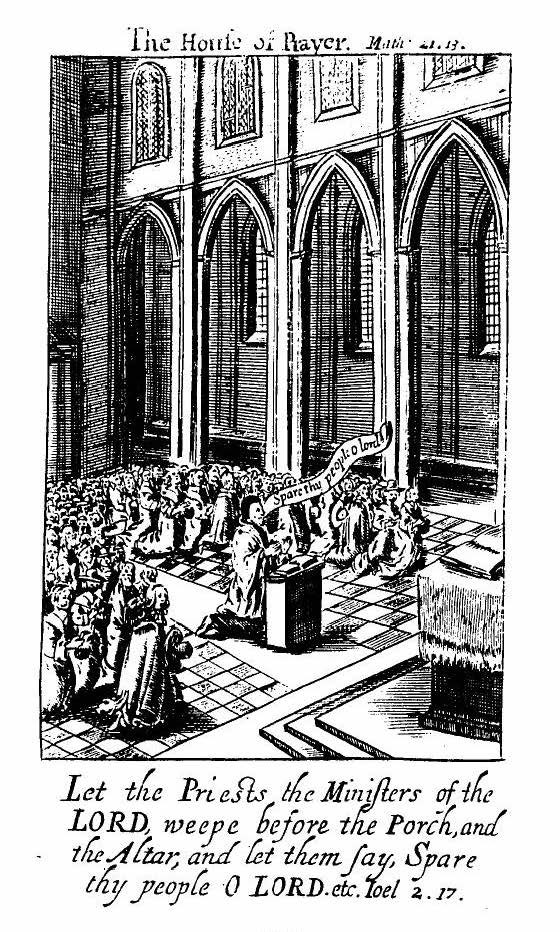
Thomas Comber, “Companion to the Altar” (1676) 
Anthony Sparrow, “Rationale upon Common Prayer” (1684)
-one of the most famous commentaries on the BCP
-uses an improved version of Sparke’s 1652 image as a frontispiece for his whole book
-at length describes ad orientem as normative in the Church of England:anglican.net/works/anthony-…

Another engraving, from the 1700s: 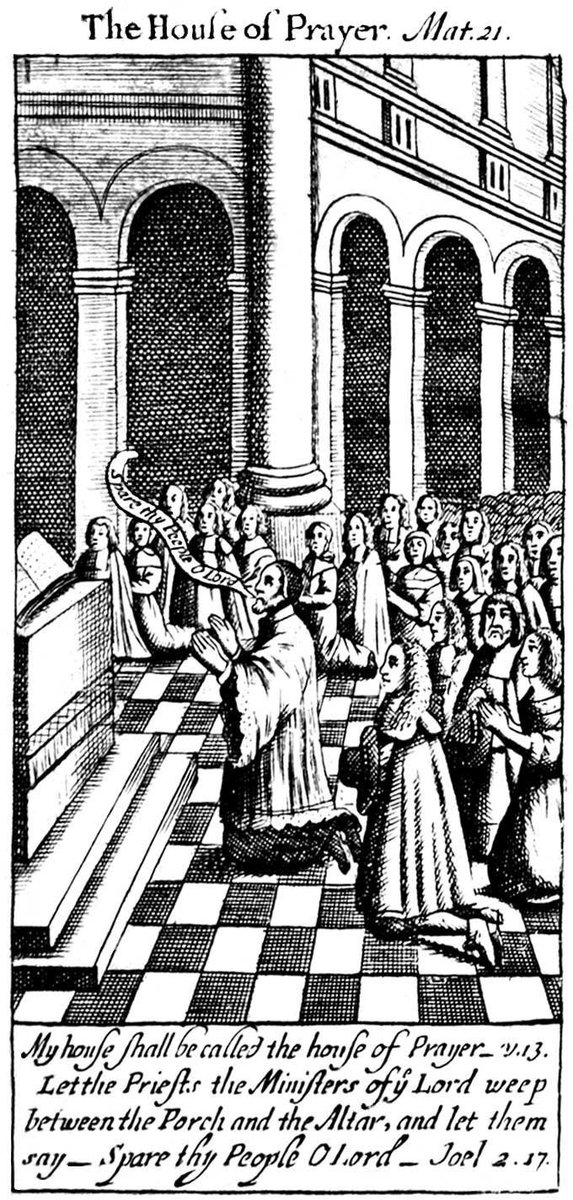
Another version looked like this.
(If you have a hi-res version, please contact us!) 
Many other Images depict an ‘implied’ ad ad orientem. In the left image, there is simply no room for standing at the sides of the altar table. In the right image, the altar setting is squarely oriented Eastward (and little room on the sides!)
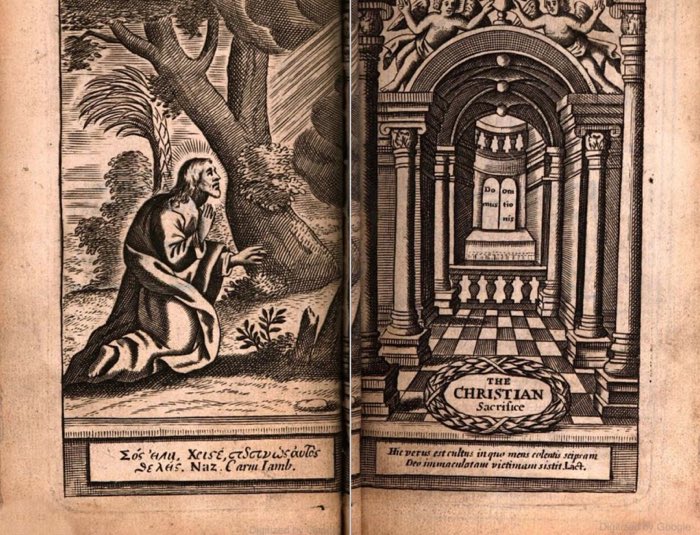
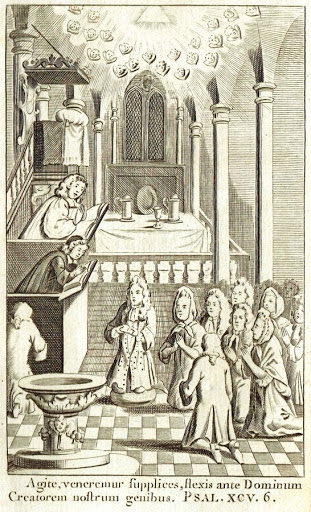
By contrast, there’s only one well-known depiction of the
“North-side” position:
-church priest stands in place of the heavenly Priest
-heavenly priest faces his altar on its wide East end
-clear contrast w/ where Liturgy Books are shown in other images britishmuseum.org/collection/obj…

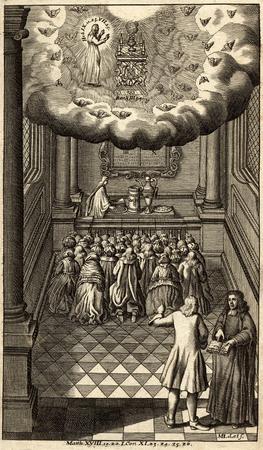
Compare this to the depiction of Holy Communion at St. Paul’s Cathedral from 1736, which is entirely frontal: 
It is clear that the Eastward position was the default:
Owen Chadwick, “The Victorian Church, Vol. 2” (1966), p. 318
-“In 1888 the eastward position was used in 71% of churches in England and Wales. By 1901, the EP is used in 85% of churches.”

The 1953 coronation of Queen Elizabeth II uncontroversially featured Eastward worship as the unifying face of Anglicanism:
Extra:
An implied Eastward position. As in similar images above, the columns tightly fence the altar table on the sides: 
Extra:
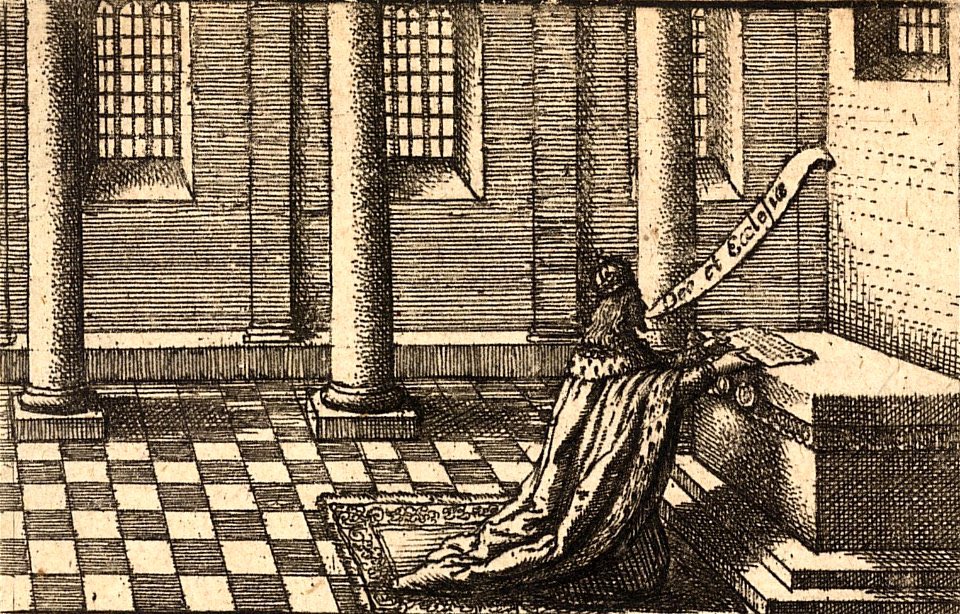
Lancelot Andrewes, “The Form of Consecration of a Church”
creazilla.com/nodes/7267779-…

• • •
Missing some Tweet in this thread? You can try to force a refresh
This Thread may be Removed Anytime!

Twitter may remove this content at anytime! Save it as PDF for later use!
More from @anglican_net
Aug 10, 2023
🧵Prayers for Faithful Departed -key spiritual practice, rooted in the 1552 Prayerbook -embodies the “Communion of Saints” -connects the living & the dead into one -purged of any links w/ Purgatory -avoids continental Protestant mistakes — Image: “The Judde Memorial” (1560). Wikimedia Commons.
Did you know that the 1552 BCP, and other official texts, contain prayers for the dead? How did the faithful use this practice, in the absence of Purgatory? What does its omission from recent books on Anglicanism say about the reliability of modern scholarship? Let’s dive in👇 
When the 1552 BCP appeared, the following texts were found within it: 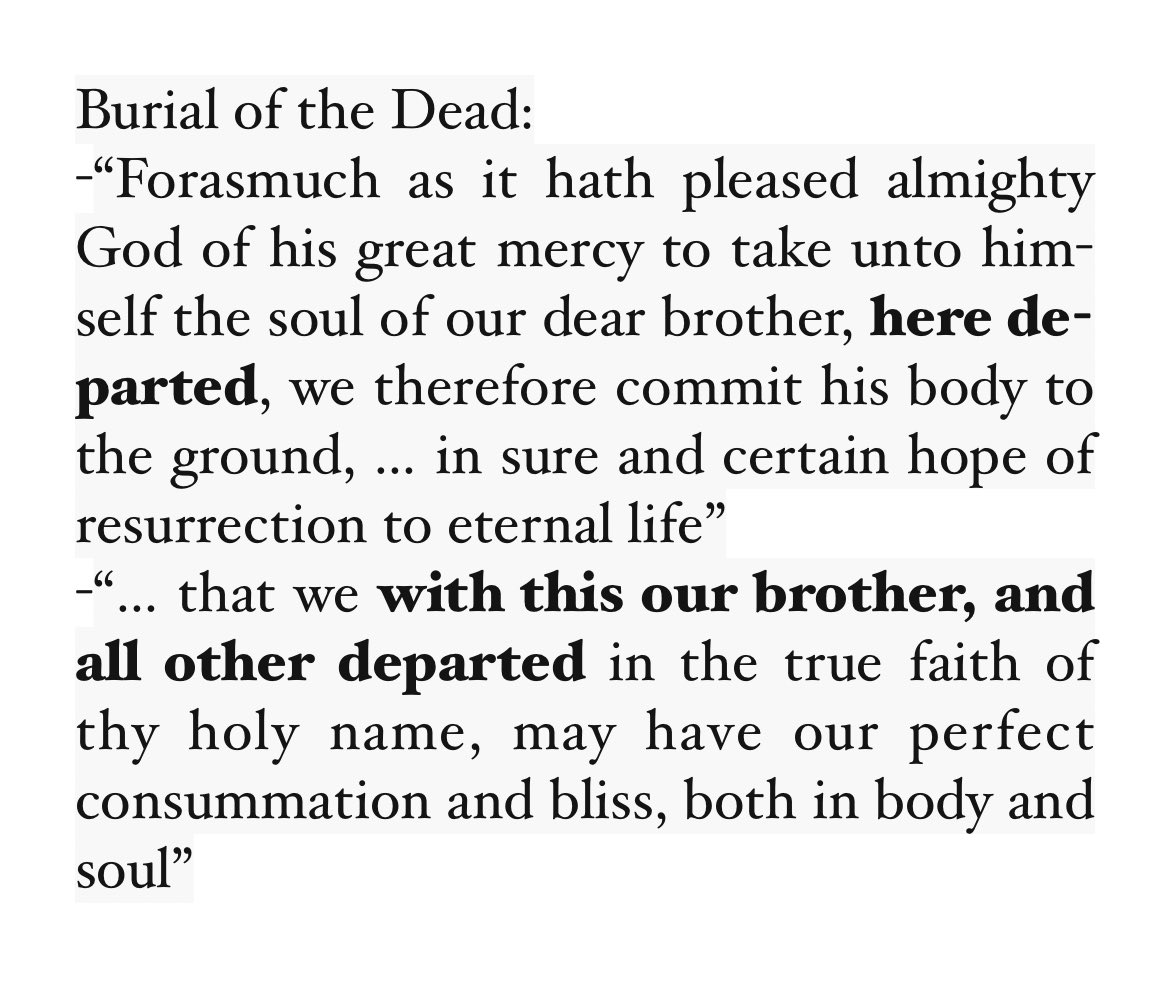
Read 25 tweets
Jul 30, 2023
🧵Roman Catholic doctrine on Holy Orders -one of worst corruptions in church history -priests allowed to do ordinations; bishops just a bonus -presbyterianism w/ a Pope; inspiration for Calvin etc -in 20th c. quietly changed and covered up, like it never existed 
What’s missing from the above diagram of holy orders? The BISHOP! How did it happen that scenes like the one below became a normal part of the Middle Ages? Let’s find out-
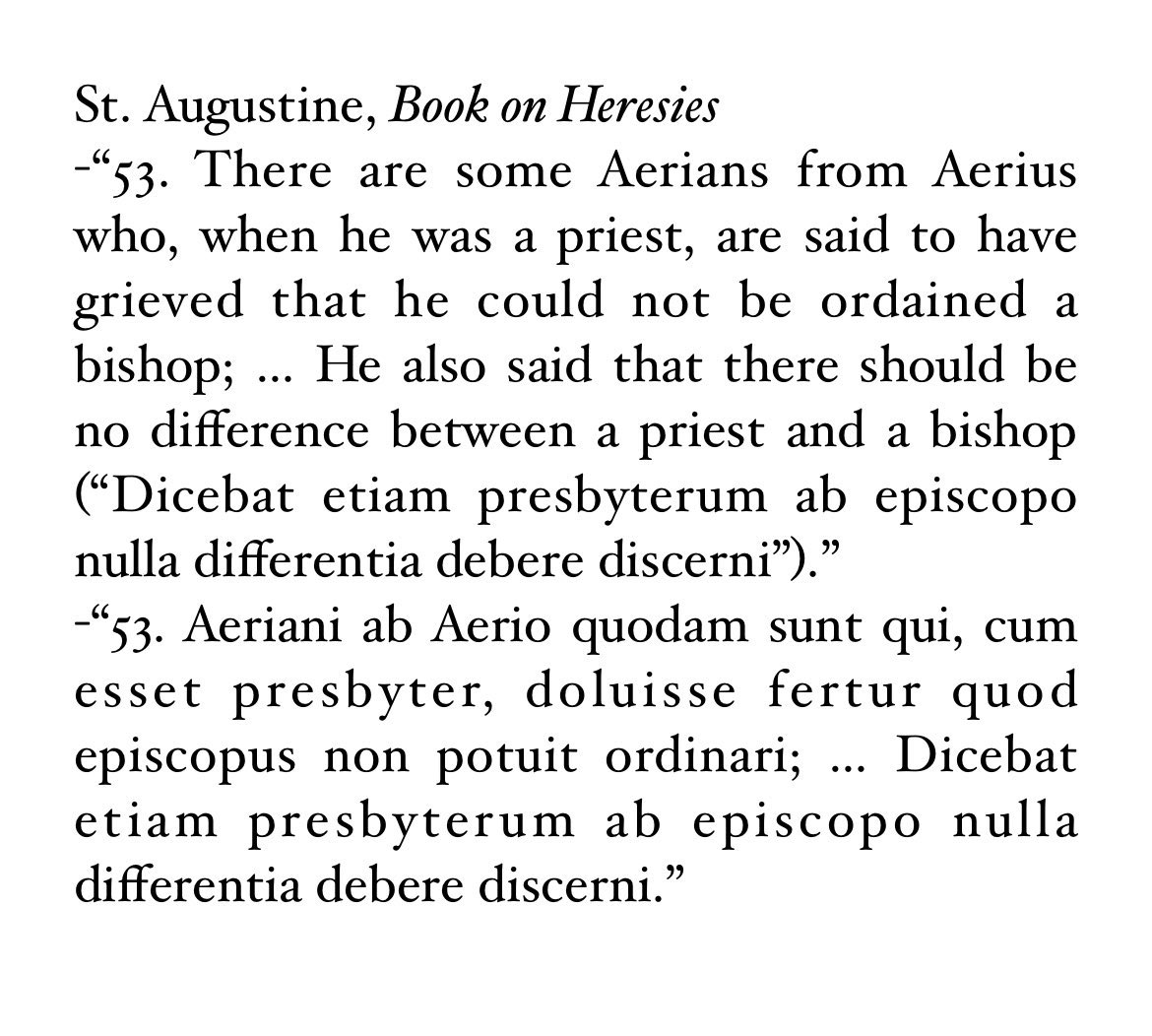
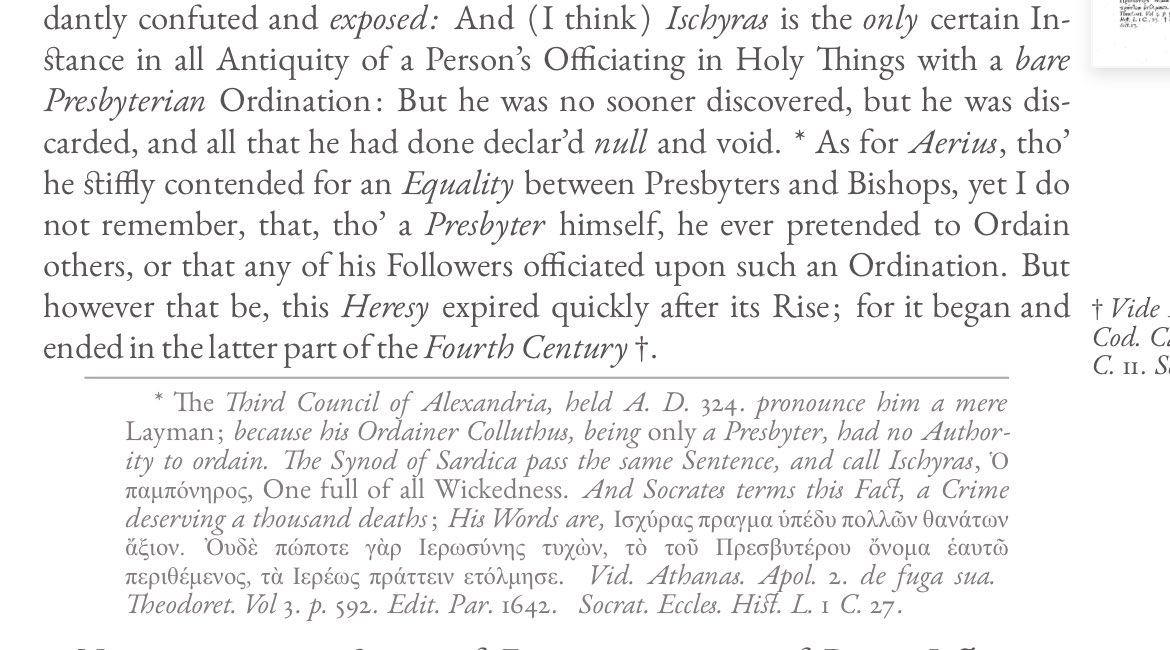
It begins with the ancient heresies of Aerius, Thebulis, Ischyras, the first ones to claim parity between bishop and presbyter, and that presbyters could ordain: 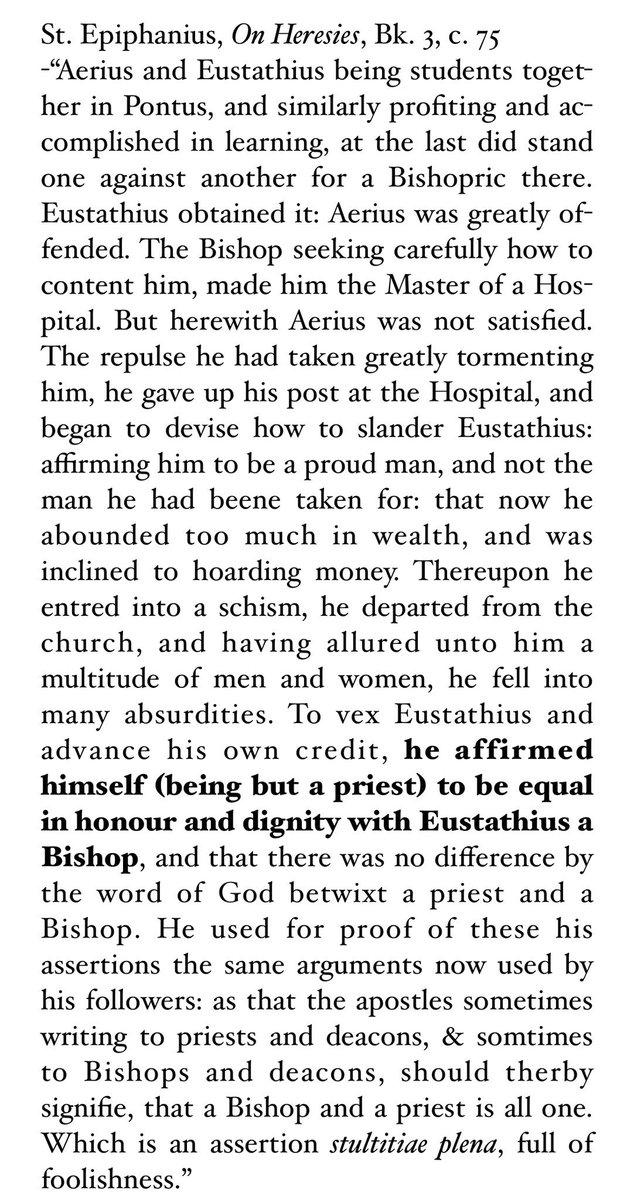

Read 24 tweets
Jul 26, 2023
🧵Does Roman Catholicism “follow the Church Fathers”? This is a common meme, grounded in the notion that at least the RCs are “more patristic” than tshirt-wearing smoke-&-mirrors US evangelicals. Which, true enough. But they fall off, beyond that lowest of bars. Let’s explore:
Table of Conftents: 1. Nature of a Sacrament 2. Icons, Images, & Apostolic Piety 3. Mary 4. Purgatory 5. “Development of Doctrine” 6. “The Chair of Peter” 7. Papacy (as defined by Vatican I) 8. “Aerian Heresy”
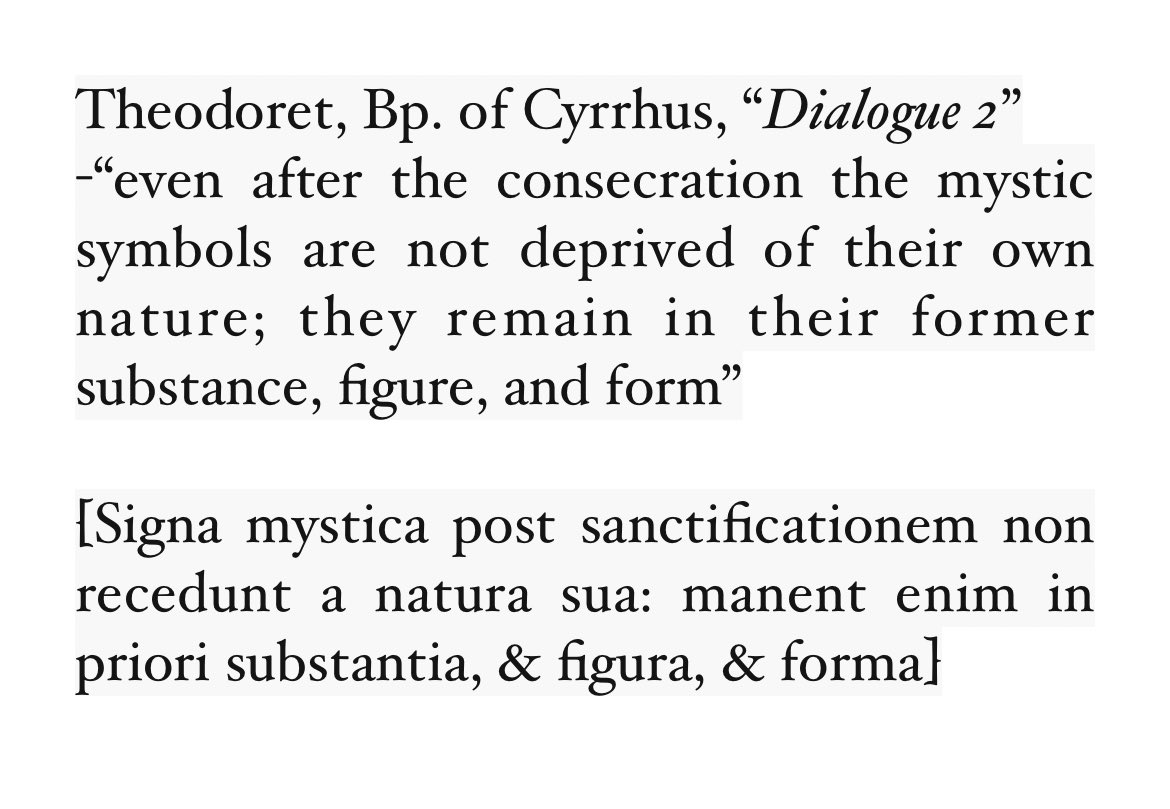
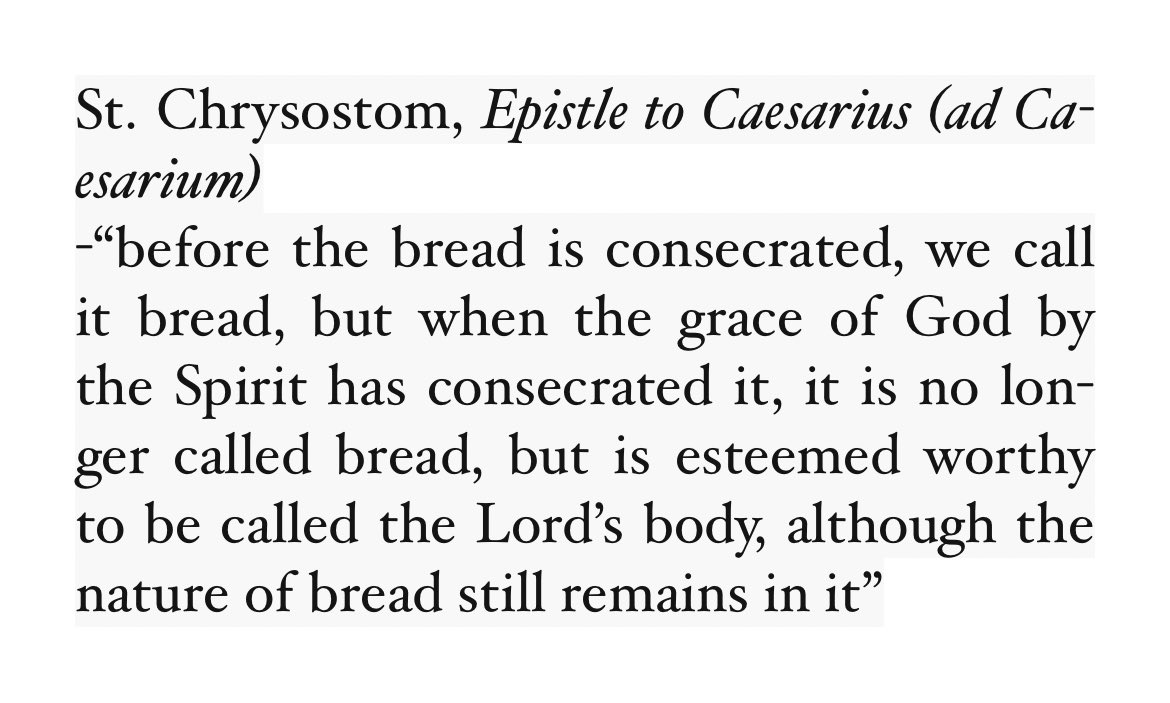
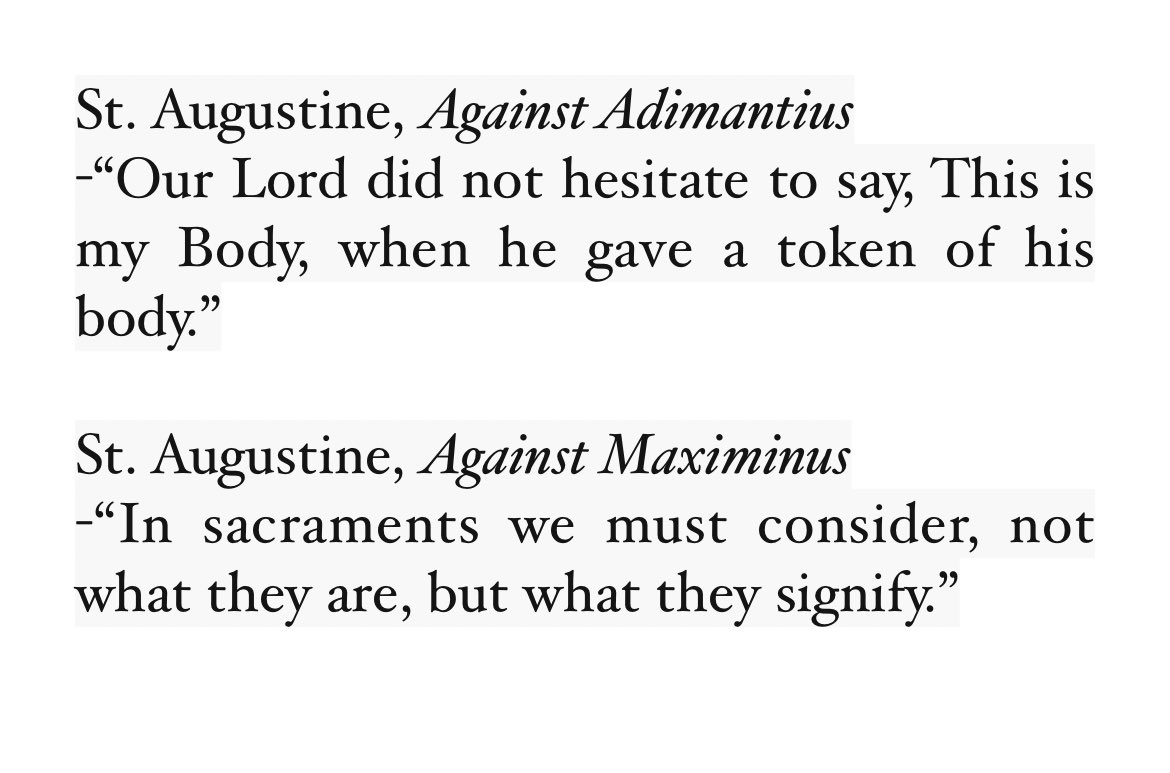
1. Nature of a Sacrament 
Read 32 tweets
Jul 22, 2023
🧵The Anglican Doctrine of Justification -righteousness is not only imputed, but infused (ie. transforms us) -we’re not only reckoned but actually BECOME righteous Let’s take a look 👇 
Homily of Salvation -“no man by his own acts [can] be justified, and MADE righteous before God” -“What is the true and justifying faith[:] not only to believe that holy Scripture, … but also to have a sure TRUST and confidence in God’s merciful promises, … whereof doth follow a LOVING heart to obey his commandments” -“[Faith moves] us to render our selves unto God wholly with all our WILL, HEARTS, MIGHT, and POWER, to serve him in all good deeds, obeying his commandments during our lives” Homily on the True and Lively Faith -“true, liuely, and Christian faith, is … a thing of perfect vertue, of wonderfull operation or working, and strength, bringing foorth all good motions, and good workes.”anglicanlibrary.org/homilies/bk1ho…
Alexander Nowell, “The Middle Catechism” (1572) -denies that justification is only imputation -teaches that justification transforms us anglican.net/works/alexande… 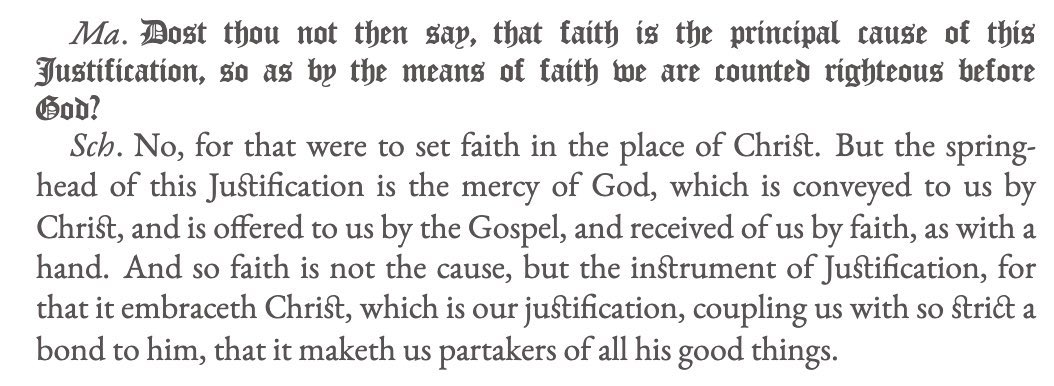
Read 7 tweets
Jul 5, 2023
“English Liberty” -a unique concept, unprecedented in world history -a thousand-years old tradition focusing on individual liberty and justice -derives from ancient English traditions of personal rights and duties -enshrines the liberties & sanctity of individual, contrasted… https://t.co/plhMJa3bhK[twitter.com/i/web/status/1…](https://twitter.com/i/web/status/1676721874670178304) 
Jordan Peterson, “Why I Love Great Britain” -The freedoms Britain granted the world are the most precious gift of all. We must preserve them -That gift is the political expression of the sanctification of the word — freedom in speech, imagination and thought: freedom to engage in… https://t.co/R8AZmjW4Th[twitter.com/i/web/status/1…](https://twitter.com/i/web/status/1676721877488680961)
C.S. Lewis: -"The State exists simply to promote & to protect the ordinary happiness of human beings in this life... Unless they are helping to increase & prolong & protect such moments, all the laws, parliaments, armies, courts, police, economics, etc, are simply a waste of… https://t.co/k9vckfuC45 https://t.co/Xgk5wbr4cP[twitter.com/i/web/status/1…](https://twitter.com/i/web/status/1676721884145106945) 
Read 4 tweets
Jun 17, 2023
🧵Theology of the Anglo-Saxon Church of England. It’s a less-known fact that the 1066 AD Norman Conquest also led to the Papacy taking over the Church of England. Before that time, under the Anglo-Saxons like King Alfred the Great, the Church of England significantly differed from the doctrines being promoted by the medieval Papacy. Let’s take a look: 👇
1. The Eucharist The eucharistic doctrine of Aelfric, a 10th c. Abbot of Eynsham, was widely seen as the post-Reformation doctrine of the Church of England. Archbishop Matthew Parker had this published: “A Testimony of Antiquity; showing the ancient faith in the Church of England touching the sacrament of the body and blood of the Lord” (1567) books.google.com/books?id=wfliA…
2. Number of sacraments A study of Anglo-Saxon theology, Lynne Grundy, “Books and grace: Aelfric's theology” (1991), finds that Aelfric afforded only to Baptism and Eucharist the title of sacraments. Online (safe-browse only!): dokumen.pub/books-and-grac… 
Read 13 tweets